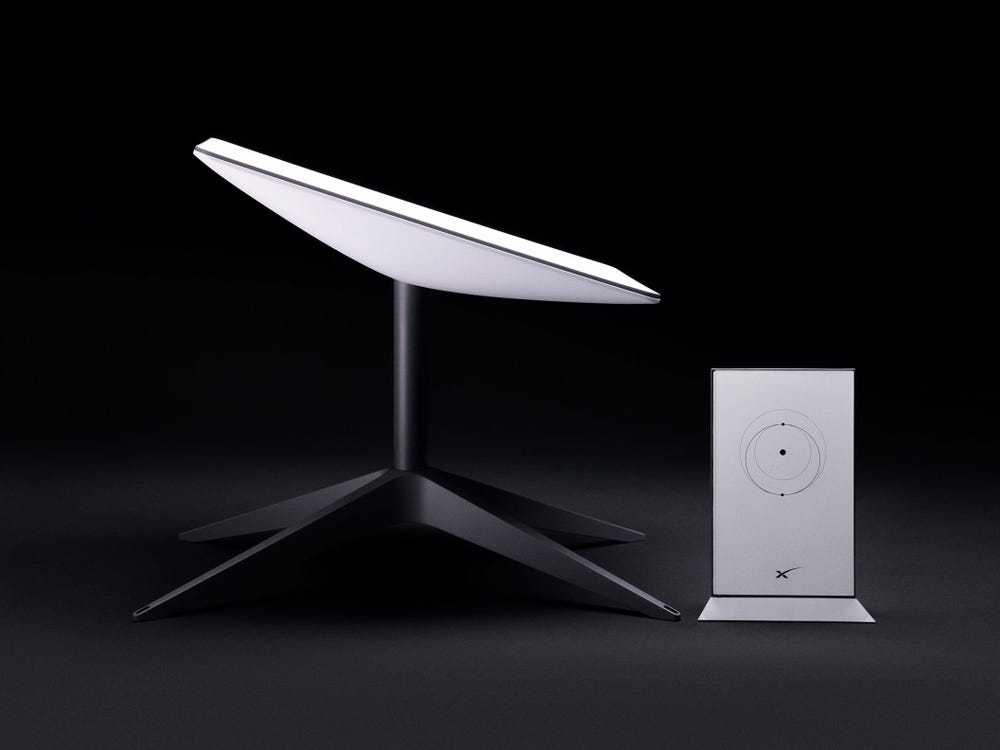
It’s been about a week since Russian troops entered Ukraine, wreaking havoc and killing citizens all over the country. Due to the loss of infrastructure in some areas, communication services have been cut off as a result of the war. After Russian soldiers invaded the country’s capital and purposefully destroyed some communications towers, Ukraine’s Vice Prime Minister and Minister of Digital Transformation, Mykhailo Fedorov, asked SpaceX founder Elon Musk for assistance in connecting communities to the Starlink broadband constellation. “While you try to conquer Mars, Elon Musk,
Russia is attempting to annex Ukraine! Russian rockets hit Ukrainian civilians as your rockets successfully land from orbit! We request that you supply Starlink stations to Ukraine and address sane Russians to stand,” Fedorov stated on Twitter on February 26. “Starlink service is currently functioning in Ukraine,” Musk said in response to Fedorov’s appeal for assistance. He said, “More terminals are on the way.”
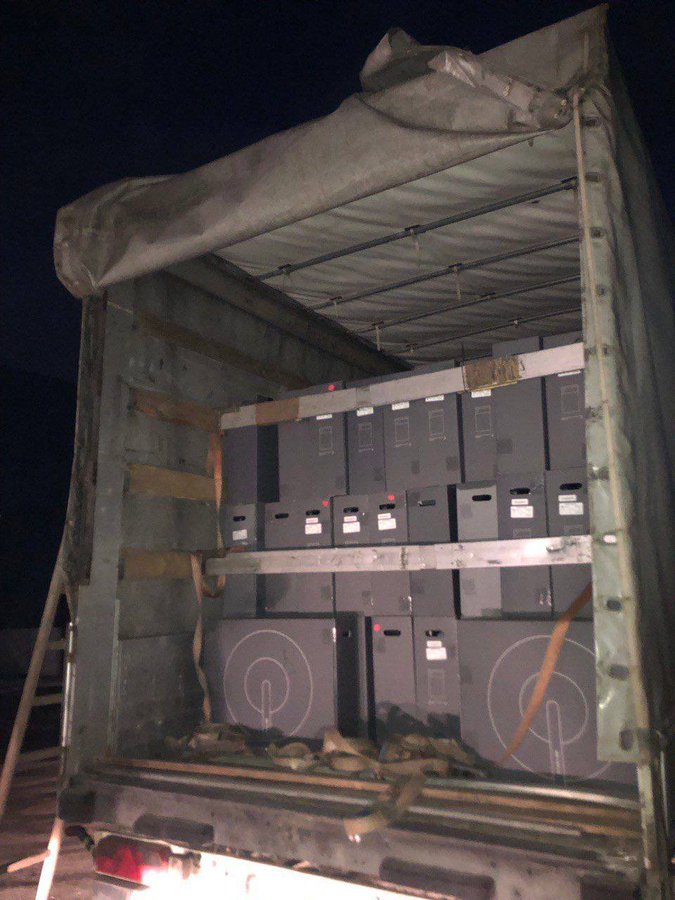
Fedorov uploaded a photo of a truck loaded with Starlink user terminal boxes delivered by SpaceX on February 28. “Here’s Starlink,” says the narrator. “Thank you, Elon Musk,” he said in the post. “You’re really welcome,” Musk said. Ukrainian first responders and troops could utilize the Starlink network to communicate with one another and coordinate civilian safety actions.
As global tensions rose, Russian leaders learned of SpaceX’s efforts to aid Ukrainians, and Musk issued an important warning: “Important warning: Starlink is the only non-Russian communications system still operational in some sections of Ukraine, thus the likelihood of being targeted is high.” On March 3rd, he said on Twitter, “Please use with caution.” “Only use Starlink when absolutely necessary, and keep the antenna as far away from people as possible.” To avoid visual detection, cover the antenna with light camouflage,” he suggested.
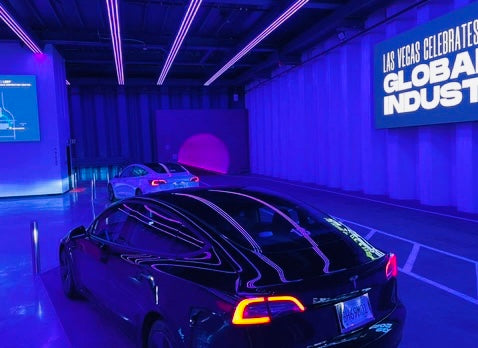
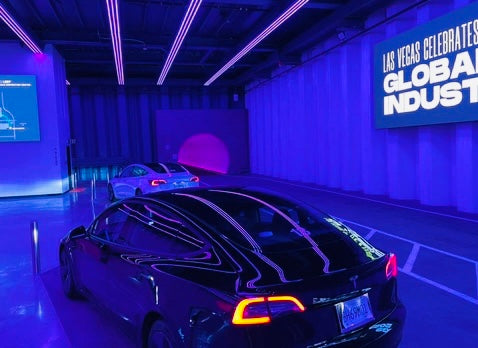
“Tunnel exit at Vegas Loop: 190-meter turn radius on a vertical grade transition.” For the optimum Loop customer experience, Prufrock mobility is important to ensure passenger drop-offs are exceptionally close to hotel main entrances.” The Boring Company is a company that specializes in boring. Elon Musk, the founder of “The Boring Company,” built the LVCC (Las Vegas Convention Center) Loop, the first Boring Company operating tunnel, in Las Vegas, Nevada.
The Boring Company specializes in boring underground tunnels at a fraction of the expense of traditional tunnels. ‘ Loops are the technical name for The Boring Company’s tunnels, which are intended exclusively for electric vehicles. “Loop is an all-electric, zero-emissions, underground public transportation system in which passengers are carried straight to their final destination with no pauses along the way,” according to The Boring Company’s website. In compared to similar tunnels created with expensive air ventilation systems to keep clean air in the tunnels, the tunnels are substantially more cost effective without the requirement to ventilate them from poisonous CO2.
“Why tunnels?” he was asked. “To overcome the problem of soul-destroying traffic, roadways must go 3D, which implies either flying cars or tunnels are required,” Elon Musk remarked. Tunnels, unlike flying cars, are weatherproof, hidden, and won’t fall on your head. Tunnels reduce the amount of precious surface land used and do not interfere with current transportation systems. Any city can benefit from a wide network of tunnels; no matter how large a city becomes, more levels of tunnels can be built.”
The Boring Company was founded in 2016 with the goal of alleviating traffic congestion on city streets. Since then, TBC has been working on a number of short tunnel projects within a few big cities. The Boring Company’s regular 12 foot diameter tunnel, like the one being built just under Vegas, is conventionally intended to fit a Tesla in it.
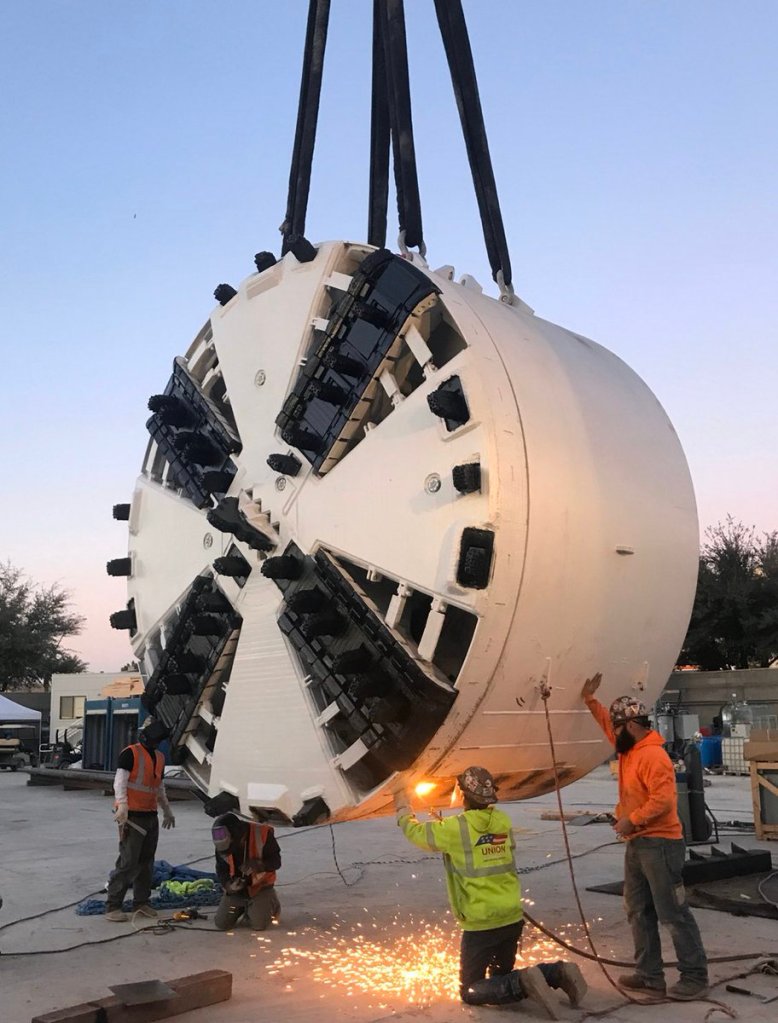
Godot-Plus and Prufrock, named after TS Eliot’s written work “The Love Song of J. Alfred Prufrock,” are two massive boring tunnel machines that are responsible for the majority of the digging. “Prufrock is designed to tunnel at a speed of 1 mile per week, which is 6 times quicker than The Boring Company’s previous generation TBM,” according to the TBC website (Godot-Plus). Prufrock is still 4-5 times slower than a garden snail, but he’s getting there!” There will be no carbon monoxide from exhaust, long wait times, noisy engines, or bad weather difficulties within the Teslas and tunnels.
Most of the passenger vehicles for the tunnels are Tesla model Ys that can be hailed via a specific app for the Vegas tunnels. For those with specific needs such as a wheelchair, model Xs are available. 
Boring Company drivers are currently being employed in the early stages of the tunnels’ opening launch.
The 60-80 vehicle Tesla fleet that will be used in the tunnels exclusively, noted as a Ride Hailing system, will significantly cut back transfer time between different locations in Vegas. What could have been a 45 minute surface street walk will Now be 2-5 minutes. There will be no need to bother walking far or waiting on a corner for transportation help.
The LVCC Loop, is a three-station transportation system consisting of 1.7 miles of tunnels, aimed to be built in approximately one year of beginning construction and tunneling in mid 2019 and ended mid 2020, but due to Covid restrictions and closures wasn’t open to the public until mid 2021. The LVCC Loop cost was $47 million which included two tunnels and three large stations, two surface and one subsurface.
The South Station, Central Station, and West Station are the three stations in the LVCC Loop that anyone can use. When the entire Vegas Loop is completed, the LVCC Loop will be part of connecting tunnels as well as several casinos. In terms of the Vegas Boring Tunnel Systems, the LVCC Loop system will carry 4,400 people per hour via three major stations, while the Vegas Loop would transport 57,000 passengers per hour via 51
medium stations.
The Vegas Loop a significantly larger project, is expanding to 29 miles and 51 stations total. Clark County team partnered with the County Commissioners for an unanimous approval of expansion, fall 2021.
The Vegas Loop project was originally planned to be 10.5 miles long, with two parallel tunnels on either side of Las Vegas Boulevard South, totaling 24 miles of tunnels. The tunnels will remain 12 feet in diameter and 40 feet below ground level. The Vegas Loop was supposed to connect about 50 stations in total, but it presently has 51. This is in addition to prior work that has already begun to link 51 casinos and stations into a single 29-mile underground loop that will transport passengers at a rate of 57,000 people per hour in Teslas.
The tunnels are lit-up with RGB LED lights adding a fun sensory element to the service. The tunnels are outfitted with CCTV video systems, secure wireless communication, passenger cell phone service, blue light stations, fire safety system, ventilation systems, project engineering, codes and permits, environmental engineering .. all part of the packaged TBC projects.
UNIFY Financial Credit Union (UNIFY) is the first credit union to offer cryptocurrency services through NYDIG, allowing its members to purchase, sell, and hold bitcoin alongside their standard accounts using its online banking platform.
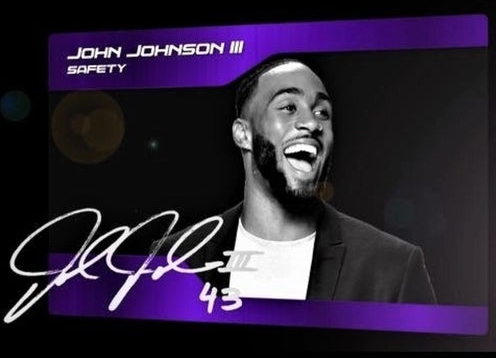
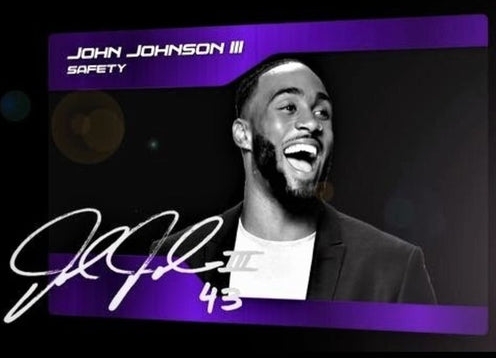
UNIFY has worked with Pro Football Player Safety John Johnson III to develop a limited edition “JJ3” non-fungible token (NFT) collectible to celebrate the debut of its digital currency business. Any UNIFY member who buys $500 in bitcoin through the credit union’s platform by February 14, 2022, will be entered to win the NFT with the pro footballer. Winners will also have the opportunity to speak with Johnson in a one-on-one Zoom call.
“As technology and consumer interests continue to evolve, we’re always looking for new ways to meet our members’ evolving demands and stay on the cutting edge of financial services. We’re excited to give members a convenient, secure, and rapid option to access cryptocurrency alongside their standard account services as part of our core digital offering as digital currencies become more widespread “Gordon Howe, President/CEO of UNIFY, said “Collaborating on this one-of-a-kind NFT collectible with pro footballer John Johnson is a terrific way to kick off our introduction into cryptoservices, and we hope our members take advantage of this opportunity to learn more about digital currencies through UNIFY.”
Johnson remarked, “I’m thrilled to be working with UNIFY, which is the first credit union to make digital currency simple and accessible to its members. This NFT allows me to celebrate and connect with football lovers from all over the country, and I’m looking forward to speaking with the winners in person.” Star Safety Johnson joined the Cleveland Browns in 2021 after starting his professional career with the Los Angeles Rams in 2017.
UNIFY has partnered with Q2, its online banking administrator, and top bitcoin provider NYDIG to offer cryptocurrency services. Here’s where you can learn more about the chance to win the “JJ3” NFT.
With over $3 billion in assets and over 265,000 members nationwide, UNIFY is one of the nation’s largest credit unions.
Tesla has patented systems and methods for employing adaptive video watermarks to provide additional information about photos and videos while driving.
Digital watermarking is a technique for concealing specific data, such as identity data about a digital media stream’s provenance. Watermarks can be inserted in image files or video frames in a way that prevents them from being removed without affecting the underlying content. Data over VBI is no longer used in modern digital television standards, therefore eliminating VBI as a data embedding technique.
Instead, modern digital televisions use a distinct data stream that is interwoven with audio and video data. While this allows for the inclusion of additional data in video signals, the data is unavailable to media devices, restricting the use of watermarks. As a result, new methods for injecting additional information into visual signals are required.
On July 30, 2021, Tesla submitted a patent for “Systems and methods for the application of adaptive video watermarks,” which was published on February 3, 2022. The current invention covers systems and techniques for creating, embedding, and/or decoding digital data code (e.g., watermarks) into a digital image that is undetectable to the naked eye.
Watermarks can be embedded in images or video frames to deliver data and/or executable code to media devices like smart TVs, set-top boxes, mobile devices, laptop computers, tablet PCs, desktop computers, and so on. By altering the pixel values of the top one or two rows of pixels, watermarks can be implanted into video frames. The watermark symbols may be detected and extracted by the media device. The symbols may be processed by a media device’s processing component in order to decode the watermark’s data and/or executable code.
The symbols decoded may provide additional information about the presented video and/or cause the media device to do certain tasks. Additional information may include, but is not limited to, information about the displayed video’s content (e.g., actors, characters, settings, or any other fact or characteristic of the content), metadata about the video (e.g., resolution, pixel values, broadcast origin, etc. ), communications about the video, and so on. A trigger signal at the beginning of a movie, or a portion thereof, may be one of the decoded symbols of the watermark (eg, such as a commercial, etc.)
communications related to the video being broadcast, etc. A trigger signal may be included in the decoded symbols of the watermark at the start of a video or a portion thereof (e.g., a commercial, etc.) to allow a media device to detect the trigger signal and substitute a video segment (e.g., an advertisement, commercial, other video segment, or the like) stored locally in the set-top or smart TV’s memory, or display video information from a remote server. video frames or segments of video frames containing video frames stored locally, video frames decoded in the watermark, or video frames streamed from a remote server.
Embedding a code into a movie to be utilized as a signal to a media device, such as a smart TV or set-top box, is one example of how the systems and techniques described herein can be used. When the data code is received by the client television device, it may cause the client television receiver to substitute a different video segment (e.g., one or more video frames) for the video segment currently being displayed. This procedure is known as “dynamic insertion” or “dynamic ad insertion” when an advertisement is involved.
In real time, a video section may be dynamically replaced with another video segment. For example, if the client device receiver detects one or more frames that are eligible to be replaced (e.g., a watermark in one or more frames), the client device receiver can replace the one or more frames with one or more other frames.
A watermark may be utilized to activate an on-screen pop-up window presenting extra information connected with a shown video frame in another example application of the systems and techniques described herein.
For example, if the shown video frame contains a product, the pop-up window may contain product-related information. If the shown video frame is from a movie or television show, the pop-up window may contain information on the actors in the video frame or in the movie or television show, as well as any other information about the movie or television show.
A universal resource locator (URL) link to a website that offers the extra information and/or allows the user to purchase the product being displayed can be included in the pop-up window. A web browser on the media device may be able to access the website and enable the transaction. A rapid response (QR) code that a user can take with a mobile device can also be included in the pop-up window.
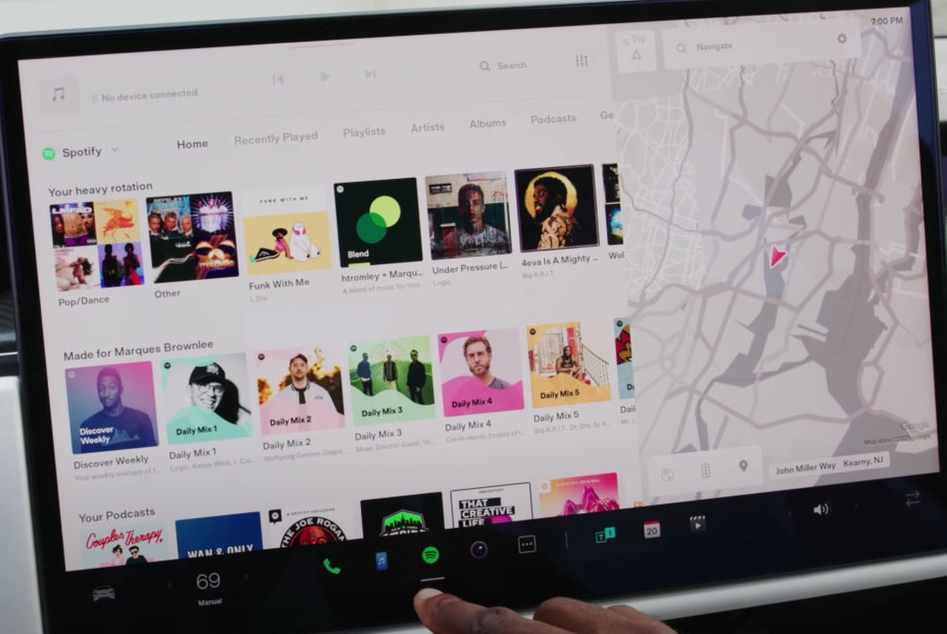
This discovery opens up a wide range of possibilities for improving Tesla vehicles’ capabilities and making their use more convenient for users.





 TESMANIAN BLOG